
In the UAE, many homes have both a traditional majlis and a living room. In this article, we provide a comparison of a living room with an open plan vs a separate majlis, plus a furniture layout guide.
As a curator of tasteful, contemporary furniture, furnishings, and accessories in the UAE, Al Huzaifa has worked with countless UAE homeowners who wanted to transform their homes into luxurious but functional spaces. Below, we provide modern majlis design ideas and a guide on how to furnish an open-plan living area in a UAE villa.
Key Takeaways
- Majlis spaces prioritize formal hospitality and social status, while open-plan living areas focus on private, daily family comfort.
- Define zones in open-plan layouts using rugs, lighting, and furniture placement to create functional separation without walls.
- Majlis design centers on opulent, U-shaped seating and cultural accessories, contrasting with the often minimalist, modern approach of open-plan living rooms
What Is a Majlis, and How Does It Differ From a Western-Style Living Room?
Before we go to the furniture layout guide for a UAE villa with an open-plan living room or a majlis, first, we need to understand what makes a traditional majlis different from a living room.
What Is a Majlis?
Majlis means “council” or “sitting place.” As such, it can mean both the council that makes decisions for a community as well as the venue where such decisions are made.
A majlis (the sitting place) is originally a large, open space with a carpeted floor. Members of a community (or of the decision-making council) would traditionally gather around a fire while sitting on cushions set against the walls, sharing news and discussing concerns, while enjoying some dates and Arabic coffee (qahwa).
What Makes a Traditional Majlis Different From a Living Room?
The majlis in a private UAE residence is a smaller-scale version of the community majlis. It is where Emirati homeowners welcome and socialize with their guests and serve them refreshments.
It serves a different purpose from living rooms. Since it is dedicated to entertaining and receiving guests, it is often immediately accessible from the outside, usually through the front door or a side entrance. This ensures guests won’t have to pass through private family spaces.
Meanwhile, in the UAE, living rooms are meant for the private enjoyment and the day-to-day relaxation of family members. Living rooms are often located deeper into the home, usually adjacent to the family dining area, the kitchen, and the bedrooms.

Majlis vs Living Room Interior Design Differences
The purpose dictates the interior design differences between a majlis and a living room in the UAE.
The Majlis
The majlis is the formal reception room of a UAE home. It is designed not only to welcome and honor guests with generosity and grace, but it also represents Gulf hospitality, social status, and cultural identity.
As such, it is typically a large room furnished with large sofas and ample seating, usually along three walls. Furniture and accessories often include:
- Large carpets
- Ornate tables
- Statement lighting
- Curated accessories
Majlises exude both warmth and opulence. This is accomplished through a combination of rich fabrics (velvet, brocade, microfiber leather), warm metallic accents (gold, brass, antique bronze), marble and travertine surfaces, and deep jewel tones contrasting with a neutral-palette base.
The Living Room
In contrast, the living room in a UAE home is the private, informal family sitting area. It is where the family relaxes together, watching television and spending time with children. Since it is not meant to be shown to guests, it can be a lot more casual and informal than the majlis.
Modern Majlis Design Ideas for a UAE Villa
How do you furnish a majlis? Here are modern majlis design ideas for a UAE villa.
Furniture
In the majlis, seating is the dominant feature. Sofa sets and chairs are typically arranged in a continuous, U-shaped or three-sided configuration along the walls, leaving the center of the room open.
- Large leather sofas can make excellent seating for a modern home’s majlis.
- A Channel-back sofa can also make an elegant addition to a majlis.
- A low-back sofa can be a good option.
- Finally, consider complementing your sofas with well-placed footstools and ottomans.


Remember: In a majlis, the pieces tend to be large-scale, plush, and upholstered in rich fabrics. Gilded or carved wood frames are common. Low, wide coffee tables or service tables run along the center for tea, coffee, and dates.
Aesthetic & Materials
The majlis leans toward opulence, ornamentation, and cultural symbolism. Expect heavy drapery, patterned upholstery, carved woodwork, gilded accents, handmade carpets, striking paintings, and a warm, jewel-toned or cream-and-gold palette.
In the majlis, culturally and heritage-rooted accessories make sense:
- Incense burners (mabkhara)
- Arabic coffee pots (dallah)
- Ceremonial trays for serving qahwa and dates
- Mirrors and clocks with elaborate gilded frames
- Islamic geometric art
- Arabic calligraphy

There is a deliberate grandeur in a majlis, as the room is designed to impress.
Lighting
Majlises tend to feature dramatic chandeliers or ceiling lamps as centerpieces, often large, crystal, and multi-tiered.
The lighting is warm, ambient, and sometimes theatrical. Sconces and floor lamps in ornate fittings complement the main chandelier.


How Do You Furnish an Open-Plan Living and Dining Area in a UAE Villa?
In contrast to the majlis, the modern UAE home’s living room is commonly open-plan, flowing into the dining and kitchen zones, as well as to the access hallways of the family members’ bedrooms.
For structure, we recommend clearly defining the individual zones in an open-plan space. Below, we provide suggestions on how to zone an open-plan living and dining area and how to furnish an open-plan living area in a UAE villa or apartment.
How to Define Zones in an Open-Plan UAE Apartment or Villa
The kitchen is easy to distinguish and separate from the rest of the zones in an open-plan room because it is usually against a wall, which you can dress in kitchen wallpaper, and because of the kitchen- specific elements: countertops, backsplash, sinks, and kitchen appliances. A kitchen island can further emphasize separation.
For the rest of the open space, you can separate the living and dining areas by using visual anchors.
- Rugs: A rug placed under and around the sofa (or to encompass the entire living area) visually marks that space and separates it from the dining zone. You can also place a different (but complementary) rug under the dining table and chairs.
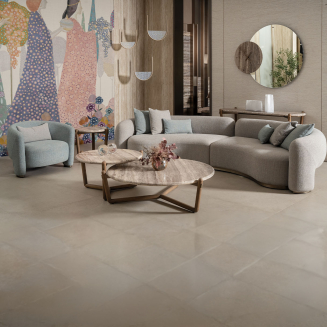
- Furniture: Open-plan living rooms often feature sectional sofas as well as accent chairs and armchairs gathered around a central coffee table. The seating usually faces a television, and one of the sofas has its back to the dining area (plus maybe a console table) to create a visible delineation of space.
- Lighting: Add a floor lamp beside a reading chair in the living area. Define the dining area with a pendant lamp or a chandelier hanging over the dining room furniture.
- Levels: Some designers vary the height or level of the living and dining areas, maybe lowering the ceiling for the dining area or raising the dining zone’s floor by one step.
- Color and Materials: The living and dining zones can have two different types of marbles or materials. There can also be a shift of color or shade from one area to the next (e.g., from sage to olive).
- Plants: Plants (also faux plants) can create a soft visual barrier between the living and dining areas in an open-plan space. As an added bonus, plants can significantly beautify and energize a space.


How to Furnish an Open-Plan Living Area in a UAE Villa or Apartment
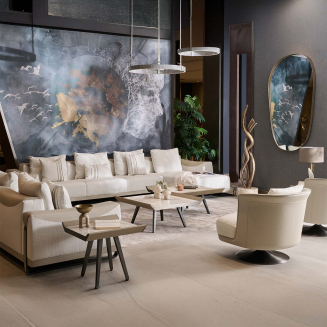
The living room in a modern UAE home is far more likely to follow contemporary Western design trends: clean lines, neutral palettes, natural materials (stone, wood, linen), modular furniture, and minimalist accessories.
Start with a sofa. A large, L-shaped sectional works particularly well because it readily defines the living room zone. Next, add a coffee table, end tables, an accent chair (or two), and maybe a console table for the back of the sofa facing the dining area.
Use more layered, functional lighting, such as recessed ceiling lights, a statement pendant, a floor lamp beside a reading chair, and table lamps on side surfaces.
Living room accessories are also personal and eclectic. A mish-mash of family photographs, books, faux plants, abstract wall art, scented candles, and sculptures and figurines allows for a more individual expression of taste.


Frequently Asked Questions
Yes, a traditional majlis can incorporate contemporary furniture to achieve a modern Gulf luxury aesthetic. Blending the customary carpeted, multi-piece seating arrangements with modern elements like curved modular sofas or sleek LED chandeliers preserves classic Arabian hospitality while introducing sophisticated and clean design lines to the Emirati reception space.
A modern Arabic majlis is defined by a generous U-shaped seating area composed of multi-piece sofa sets, plush corner armchairs, and flexible seating ottomans. Striking marble or travertine center tables and individual side tables provide a space for serving refreshments. They are complemented by opulent wall consoles, grand statement chandeliers, and a lushly woven carpet.
Create visual zones in an open-plan UAE apartment by framing areas with large rugs. Define the main seating boundary using an anchor piece like a sectional. Finally, delineate distinct dining or reading spaces using tailored pendant lighting and strategic biophilic corners.
Introduce layered intimacy and incorporate a warmth layer using sculptural accent chairs. Anchoring adjacent surfaces with a large-format feature wall piece, such as an abstract painting, adds artistic sophistication that visually grounds the entire multi-functional room layout.
Formal majlis settings require generous multi-piece configurations, such as 4+3+1 arrangements. Deep, plush, fully upholstered fabric styles or quilted channel-back sofas will work great, especially in designs or colors that gracefully echo traditional Arabic upholstery patterns or paired with a handwoven carpet and Arabic accessories.
Yes, a separate majlis is highly valuable in a Dubai villa layout because it honors the Arab heritage, showcases Gulf hospitality, preserves cultural identity, and elevates status. It provides a dedicated, formal reception space in which to welcome and entertain guests while maintaining the privacy of the main family living areas.
In open-plan UAE homes, rugs act as structural anchors that visually separate distinct functional zones. Large carpets draw clear seating boundaries around furniture arrangements, defining zone perimeters and framing the distinct living areas, while introducing essential texture and warmth to the layout.
Living Room With an Open Plan vs a Separate Majlis: Furniture Layout Guide
Many modern UAE homes have both a majlis and a living room. The majlis is for entertaining guests, while the living room is for private family use. Majlises are typically rectangular, with banks of seating along three walls. Living rooms are typically open-plan areas that share the space with the dining area and kitchen.
Deciding between having a dedicated majlis for receiving guests or letting the living room serve as both the family entertainment and reception space is yours to make, but you can try out our suggestions above regarding furnishings, accessories, and furniture layout.
Shop your preferred majlis or open-plan living room look now, or book a free interior design consultation to achieve a complete, bespoke look for your majlis and living room.